

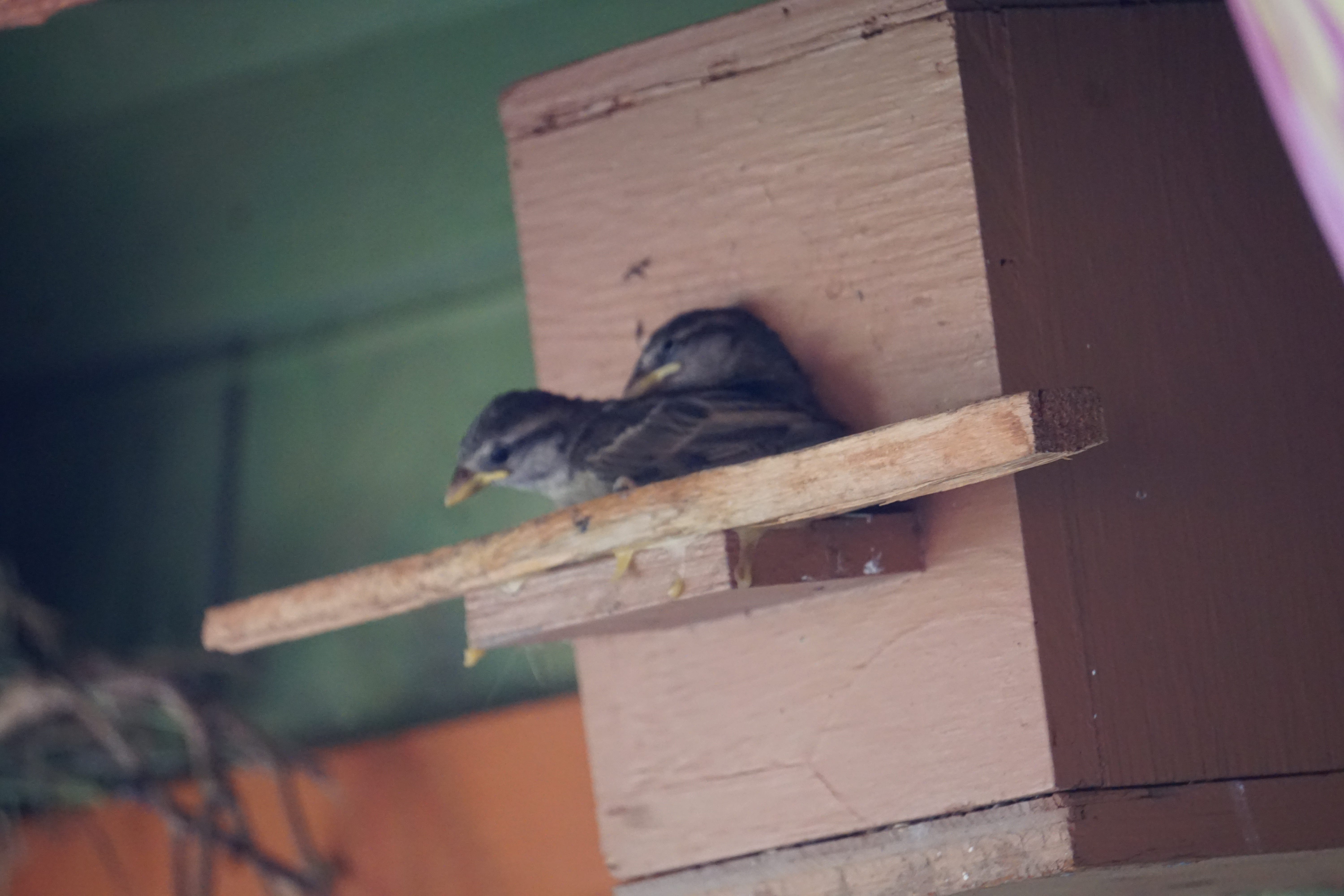
Over the years, I’ve converted my yard from a lawn with a few trees to a wildlife sanctuary. During spring and early summer, all six bird houses and numerous knotholes in the juniper trees became prime real estate for nesting birds. The wild cacophony from sparrows, nuthatches, doves, jays and flickers feeding hatchlings sometimes became so loud I’d have to move a Zoom meeting from my deck back into the house because colleagues couldn’t hear me over the song and chatter.
Adding to the raucous harmony were squabbles at the feeder, and exuberant splashings in the bath and fountain. Large rose bushes and a thicket of honeysuckle teemed with sparring sparrows finding a sheltered place to hang out.
Countess times I’ve seen the first brave flights as hatchlings spread immature wings and launched into the wider world. I loved all of it.
And now it is gone. My yard is quiet.
I live in Central Oregon, one of the fastest growing regions in the country. Urban wildlife habitat is being decimated at a tragic pace here. A year ago, work began on a massive housing project a few blocks from my home. Over thirty acres of urban forest, one of the largest remaining forested areas in this section of town, was razed and the ancient rock outcroppings were blasted and jack-hammered into oblivion. Around the same time, packrats and brown rats invaded my cul-de-sac. I’ve lived here twenty years and have neighbors who’ve been here longer than that. We had never seen rats before.
Within weeks nearly all the songbirds vanished. No nests were built.
My neighbor started trapping rats. I hate killing animals and particularly detest trapping because it isn’t always a clean kill, but as the rats became more plentiful and bolder, I too put out a trap. So far, we’ve dispatch more than 70 creatures. As I feared the traps sometimes just injure the captive and the killing comes down to me and an axe. I had a pet rat once. I like rats. But I can’t allow the unfolding infestation. It is a terrible choice, and my stomach tightens thinking about it.
The loss of birds and song in my yard is a personal manifestation of the damage being done to nature at scale, across the globe. As a professional environmentalist and activist, I’ve spent my entire life open to the pain of knowing too much about what we’re losing. I’m not alone. So many readers, colleagues, and friends have expressed similar eco-grief. Those of us who are a bit older miss the verdant, wild places of our youth that no longer exist. Meanwhile in younger people, climate anxiety and grief is skyrocketing. I suspect that nearly everyone who loves nature and values the beauty and richness of wild species and places carries some level of grief. We are the generations who understand what’s happening but haven’t yet been able to convince enough of our fellow humans to change course.
Thank you for being a reader. I value all readers in this community. Paid subscribers are who make it possible for me to offer nearly all content to free and paid readers. Please consider upgrading to make it possible to keep this research and writing going. Thank you.
Each time I sit down to write a new piece I start by asking what I hope to accomplish with the work. In this article I wanted to give voice to the grief and loss that many of us are feeling and share strategies that can be useful for coming back from the brink of despair in an ecologically damaged world.
Strategies for Moving Beyond the Grief:
Acknowledge the grief, anger, and depression. Some knowledge warrants depression. If you know how much we’re losing, how many irreplaceable places are being destroyed, if you know how many animals are suffering, and humans as a result, and you are not emotionally and psychologically upset, something is wrong with you. You hurt because you care. You grieve because you love. The reason for the depression is that you know life is beautiful and sacred, and you are recognizing the destruction of the sacred. If life wasn’t beautiful and precious you wouldn’t give a shit about it being destroyed. You feel grief, depression, anxiety from what is happening not because you’re broken, but because you are human and longing for humanity to do better. As Krishnamurti noted, “It is no measure of health to be well adjusted to a profoundly sick society.”
Appreciate the glorious and abundant beauty that still remains. My yard is still beautiful even in its quieter, less vibrant state. A few scrub jays still take the peanuts I offer in the mornings and hummingbirds drink from the hanging baskets and honeysuckle. Yesterday, after I’d written the first section of this essay, I went to a friend’s place on the outskirts of town to take an agility lesson with my pup, Micki. The four-acre property contains juniper forest and fields and a small flowing canal. As I parked, sparrow fledglings chirped and hopped along the fence railing calling to their parents for a meal. The property was alive with bird song. My heart hurt for what was now missing from my own home but I was glad to see the cheeky little buggers getting on with life. I’m glad to know they exist.
Exercise your agency, take action wherever you can to protect the beauty that still remains and restore beauty that has been lost. Even if you may not know how to solve a gnarly problem, taking action, with heart-centered intention helps ease the grief and depression. We take action, and if it proves to be insufficient, we reassess and try something else. That is what activists have been doing since the beginning. It’s key to act not out of anger and fear, but out of love and a sense of honoring the sacred. There is much that can be saved, and restored, and it is absolutely worth fighting for.
Exercise agency over your own mind. Meditation, mindfulness, unplugging and getting out into wild places is medicine. Period.
Gather with like-minded people. I’m a firm believer in getting out of our media silos and having conversations with those who hold opposing opinions. However, when we are facing something as serious and heavy as the destruction of our living world, and the future of our children, it’s not worthwhile or healthy to spend time with people who refuse to believe science or the evidence right before their eyes.
Develop joy muscles. Joy is more than a momentary flash of happiness. Joy is the ability to demonstrate “hallelujah anyway”, to see beauty and goodness beyond the darkness. Joy is the ability to stay open-hearted and appreciative. Joy can coexist with grief because joy understands that the depth of grief reflects the depth of love.
Remember the awesome, regenerative power of this magnificent Earth. Nature is incredible, heroically resilient. There are so many examples of healing and restoration taking place at this very moment. Next week, as I do every so often, I’ll send out another compilation of impressive and hopeful environmental success stories. In the meantime, let me share this awesome news I learned this morning while working on this essay. For the first time in 120 years the great condor is flying free in my home state of Oregon. A two-year-old female called B-9 is part of a restoration project led by the Yurok tribe of California. She decided to broaden her horizons and do an 80-mile tour of Southern Oregon before heading south again. You can read more about the giant lady’s historic flight here. Nature/ life is always seeking health and expansion and will find it when given half a chance.
I hope B-9 continues to grace the skies of Oregon and beyond, and I hope the birds and their songs come back to my yard. More than anything I hope humanity comes into balance with the rest of nature. I long to be part of a human species that is a restorative force on this planet.
And, readers, I hope some of you find value and comfort in this story. We are all connected and despite hard happenings, there is a possibility of creating a world that works better for all beings. ❤️
This publication is 100% reader supported — no ads, no corporate sponsors. I put an immense amount of time, intention, and love into this work. If you haven’t yet, and are in position to do so, please consider upgrading to a paid subscription to support this effort. I’m offering a full 50% discount right now as a thank you to regular readers.
Before you go—hit the ❤️ like button and re-stack this edition right now. Every time you share, you’re getting this information to someone who may be caught in a media silo propaganda bubble. That’s part of creating a world that works better for all beings. Thank you!
Much love,
Cylvia


